How can I have a garage gym and still park my car?
Design separate parked and training states, including the car's doors, storage access, and the equipment reset. Reserve a suitable fixed storage zone and use movable equipment only as its maker permits. Account for floor slope, water, temperature, and ventilation; never idle a combustion-engine vehicle in the garage.
Measure the car in daily use
Park as you normally do, then measure the vehicle, opened doors, hatch or trunk, and the route used to enter the house. Include bicycles, bins, tools, and seasonal items that still need access. A vehicle's published width does not describe the space required to get children or groceries in and out.
Mark the boundary that gym equipment must stay behind when the car is parked. Use an appropriate marking method that does not damage the floor. Recheck with the actual household vehicles if more than one may use the space. A layout designed around the smaller car can fail when the larger one returns.
Check the overhead garage door in each position you will actually use, including its tracks and opener. Record those obstructions above the proposed station rather than using only the garage's ceiling height. A tall rack or raised implement must fit its working envelope as well as its storage state; use the rack ceiling guide for that equipment-specific check.
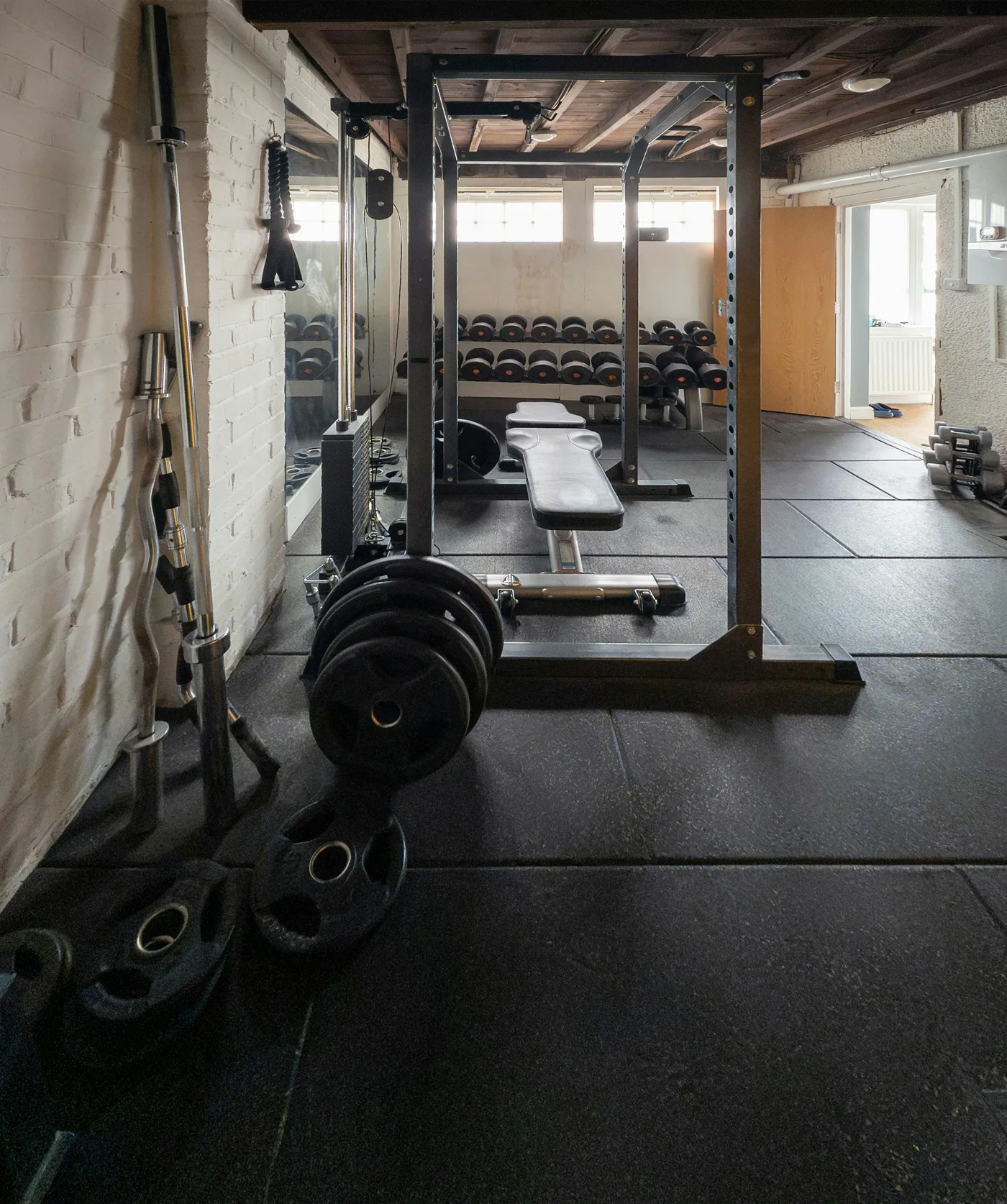
Create two complete layouts
Draw the parked state and the exercise state. List the objects that move between them and their destinations. If the car leaves for training, decide where it can legally and practically park during the session. If equipment moves, confirm its handling instructions and whether it must be unloaded first.
A folding or wheeled product still occupies space in storage and during transition. Count handles, feet, protruding weights, and the user's steering position. Do not treat the driveway as guaranteed equipment storage when rain, slope, or weather exposure would make that unsuitable.
Keep the storage zone independent
Place weights where they remain supported and accessible without moving the parked car through them. Wall-mounted storage may help when the structure and installation are suitable; freestanding storage may be easier to rearrange. Either option needs its loaded dimensions and retrieval area included.
PRx's plate-storage system is an example of purpose-designed wall storage with manufacturer installation resources. Use those instructions and verify the actual wall instead of improvising a mounting method. PRx Weight Plate Storage. Keep automotive and garden chemicals separate from training accessories.
Room layout planner
Place equipment footprints and allow space to use them.
Check floor and room conditions
Garages may have slopes, drainage details, dust, and water tracked in from vehicles. Confirm equipment and flooring requirements for the actual surface. A thick rubber layer does not make a slope level, and improvised shims or soft stacks can create unstable support. Preserve drainage and required utility access.
Plan the room's temperature and ventilation realistically. Do not idle a car inside the garage, and do not operate a portable generator there. Opening the door does not make those practices appropriate. The EPA identifies garage exhaust and combustion equipment as carbon-monoxide sources. EPA carbon-monoxide guidance.
Rehearse the end-of-session reset
Return weights, put movable equipment in its permitted stored position, remove loose mats if necessary, and check the car path before bringing the vehicle in. Allow wet items to dry appropriately. A quick visual inspection can catch the small plate or attachment that would otherwise remain in the tire path.
Rehearse the conversion with the car still outside, then verify that the intended parking position leaves the required doors and household storage accessible. Mark a repeatable parking reference if useful. Account for a wet-weather day too: damp equipment and flooring need their specified drying and storage conditions, even when the car needs its bay back immediately.
More questions, answered.
Can I use mobile weight storage on a garage slope?
Do not assume so. Check the product’s floor and loaded-movement instructions. Choose a suitable fixed location or obtain manufacturer guidance for the actual conditions.
How do I know whether the gym will block my car door?
Measure with the actual car parked and doors opened as used. Include loaded storage projections, not only empty frame dimensions, and rehearse the reset before buying.
Sources & further reading
Manufacturer documents and primary sources used in this guide. The current manual for your exact model takes precedence when a version changes.
- PRx Weight Plate Storage installation and specifications
- EPA: Carbon Monoxide and Indoor Air Quality
- Rogue Universal Storage System 2.0 specifications
- REGUPOL aktiv installation instructions