What type of exercise bike should I buy for home?
Choose the seated position and access that suit the intended riders first. A recumbent design supplies a supported seat with the pedals ahead; an upright bike offers a more vertical arrangement; an indoor cycling bike uses a cycling saddle and adjustable riding position. The best choice must fit the rider, the room and the way the bike will actually be shared.
Related catalog options
We may earn a commission from qualifying purchases, at no extra cost to you. How this works.
Schwinn IC4
A manually adjusted magnetic bike with two shoe interfaces offers flexibility for households that want a separate screen and optional connected apps.
Check price on AmazonSchwinn IC3
The IC3 offers manual resistance, a basic LCD and dual-sided pedals for a buyer who wants controls on the bike without relying on a mounted subscription screen.
Check price on AmazonSchwinn 290 Recumbent Bike
The 290 adds a padded, ventilated seat and a wider set of resistance settings, with a media shelf for buyers who want optional app content on their own device.
Check price on AmazonWe may earn a commission from qualifying purchases, at no extra cost to you. How this works.
On this page
Begin with the rider's position, not a ranking of bike typesA recumbent bike makes the seat the center of the decisionAn upright bike can be a straightforward seated optionAn indoor cycling bike rewards attention to setup detailsShared use exposes problems a single demonstration missesMeasure operating space in the actual roomChoose the console and running costs after the layoutBegin with the rider's position, not a ranking of bike types
All three categories keep the bike in one place while the rider pedals, but the experience of getting on, sitting and reaching the controls can differ considerably. A recumbent seat supports the back and places the pedals ahead of the user. An upright bike places the rider more above the pedals. An indoor cycling bike emphasizes a saddle-and-handlebar relationship that can resemble a cycling setup. Those descriptions identify starting points for a shortlist, not a universal order from beginner to advanced.
Write down the activity you want to make convenient. Some people want an uninterrupted seated ride while watching a program. Others follow cycling classes and care about hand position, shoe connections and resistance changes. A shared household may need both. The first useful decision is which arrangement makes those sessions practical for the actual users.
Avoid buying an identity. A more athletic-looking bike is not automatically a better purchase, and a backrest does not make a machine appropriate for every person with discomfort. If pain, rehabilitation or a medical limitation drives the choice, ask a clinician about the required position and activity. Then use that guidance to evaluate actual equipment.
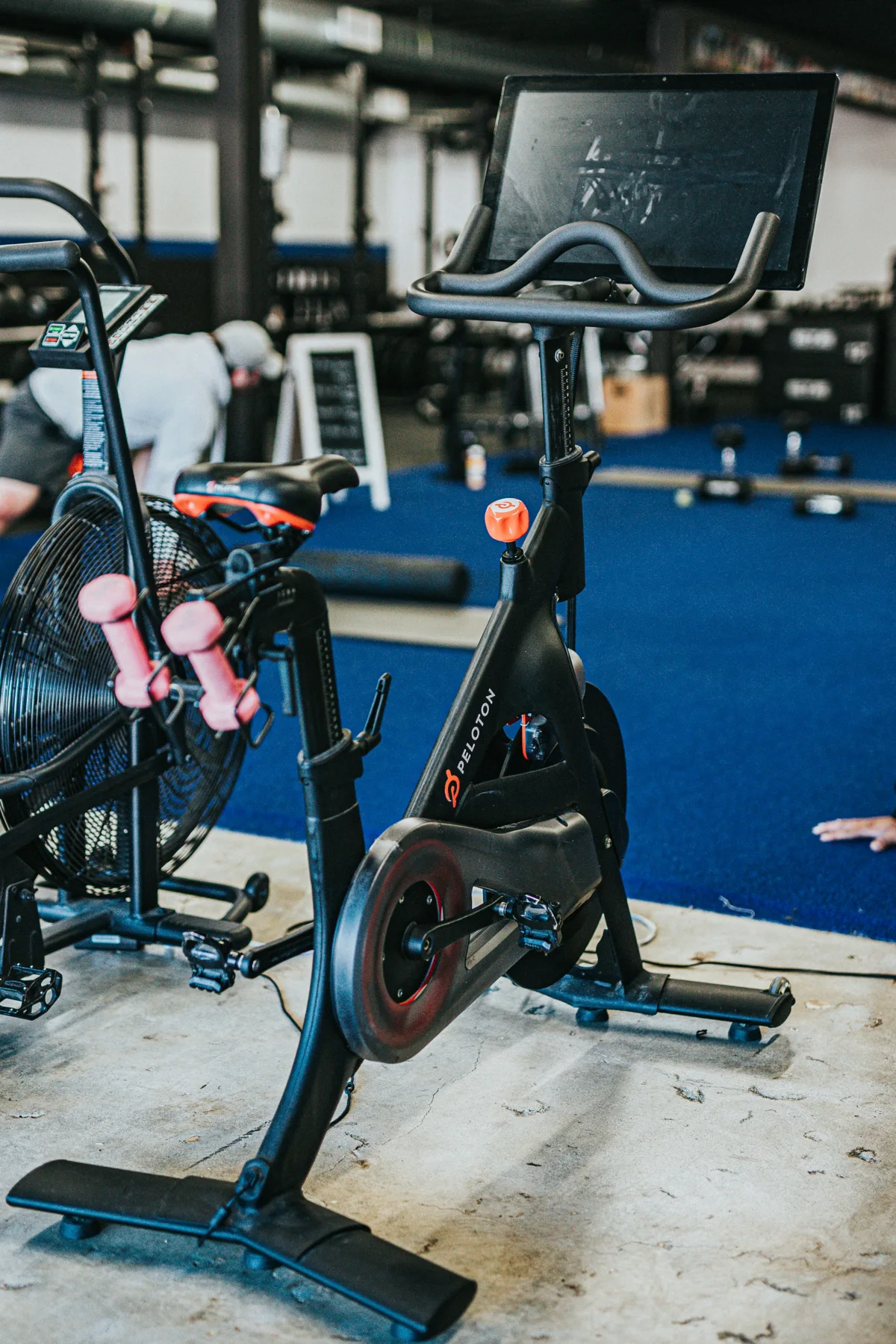
A recumbent bike makes the seat the center of the decision
Start by examining the seat, its travel and the route to it. Can the intended user enter the space, sit down, adjust the position and reach the pedals and controls? Assess the complete sequence. A large seat can look welcoming in a photograph while an adjustment lever or nearby obstruction creates difficulty during everyday use.
Schwinn's 290 is one current example with a padded seat, vented back, lumbar support and stationary handles intended to help entry and exit. Its listed frame dimensions are 66.4 inches long and 28 inches wide. Schwinn 290 specifications.
The tradeoff is that a low-looking machine can still occupy a long section of the room. Reserve the space needed to approach the seat and move through its adjustment range. Do not place the rear of the bike against furniture based only on the position of one rider. A second person may need a different seat setting.
For a hypothetical buyer who wants relaxed seated sessions while watching television, the recumbent arrangement is worth trying. During the trial, check sightline and control reach as well as the seat. If the screen is off to one side and cannot be moved, the room may need rearrangement before any bike will provide a comfortable viewing setup.
An upright bike can be a straightforward seated option
An upright layout is worth considering when you prefer a conventional bike-shaped footprint and mostly expect to remain seated. Compare the actual seat and handlebar adjustments rather than assuming they are minimal or identical across the category. There can be useful flexibility in a model that looks visually simple.
For example, Schwinn describes the 190 with four-way adjustable handlebars and a foam seat, and lists dimensions of 47 inches long by 32.3 inches wide. Its own specifications show why the words upright and compact should not replace measuring the product. Schwinn 190 specifications.
During a trial, adjust the seat-to-pedal relationship using the manufacturer's guidance, then assess the reach to the bars separately. Solving one does not automatically solve the other. Check whether the display remains readable in the position that suits you. If you find yourself choosing between reaching the pedals and reaching the controls, keep comparing models.
An indoor cycling bike rewards attention to setup details
For this category, think about the complete contact system: saddle, handlebars, pedals and footwear. A bike may offer several adjustments yet still have a limited useful range for a particular rider. The reach between saddle and bars matters alongside saddle height. Ask what the maker means by any recommended rider-height range, especially if the rider is near a boundary.
The Schwinn IC4 provides a concrete example with magnetic resistance and dual-sided pedals for SPD cleats or toe cages. Those details describe its supplied equipment; they should not be generalized to every indoor cycling bike. Schwinn IC4 specifications.
If a class involves changing position, confirm which riding positions the exact machine permits and follow its stopping procedure. Do not infer that every stationary bike can be used like the one shown by an instructor. If you plan to change pedals or the saddle, establish compatibility and any installation requirements before counting the replacement as part of the solution.
This layout can be attractive when a buyer already knows the cycling interface they prefer. It can also be a poor match when nobody in the household wants to make repeated saddle adjustments or use that riding posture. Evaluate the daily arrangement, including where shoes and accessories will live, instead of buying a package because it resembles a studio.
Equipment comparison
Put product facts and buying checks side by side.
Shared use exposes problems a single demonstration misses
Have every intended rider perform a separate fit check. Record the settings and the adjustments required to move from one person to the other. The useful observation is the transition: can each user identify the setting, reach the controls and secure the adjustment as instructed? A bike that technically fits two people can still be inconvenient to share.
Imagine a household where one rider uses the bike in the morning and another in the evening. If each can restore the needed settings quickly, one machine may serve both well. Now imagine a circuit in which they alternate every few minutes. The same adjustment process may interrupt the session repeatedly. That difference can change the sensible equipment choice without changing either rider's body dimensions.
Keep separate requirements separate. Rider A's comfortable fit does not cancel Rider B's limited reach. Rider B's preference for a backrest does not establish that Rider A must prefer it too. Look for a workable shared compromise, and be willing to choose another activity category if a single bike cannot meet the household's essential needs.
Measure operating space in the actual room
Mark the chassis, then add the model's required clearances and the approach used to get on and off. Place the room's desk, doors and other equipment on the same drawing. A bike's relatively modest footprint can encourage buyers to park it in a leftover gap; that gap still needs to support the person, the controls and ordinary room access.
View screens and windows from the rider's position. Check whether a tablet blocks the console and where its charging cable would run. A permanently placed bike usually offers simpler use than one that must be rolled out for every session, but that depends on the room. If moving is necessary, test the route and approved handling method before relying on transport wheels.
Use the small-room bike layout guide for the room assessment and the rider-fit guide for the body assessment. Keep both open until the same model passes both. A machine that fits one half of the problem is still an incomplete purchase.
Choose the console and running costs after the layout
Now list what you need on the display: elapsed time, a chosen workout, heart-rate input or a particular class connection. Ask which features work directly on the machine and which depend on another device, an account or a paid service. A resistance type does not tell you the subscription policy, and a subscription policy does not tell you whether the seat fits.
Compare complete delivered quotes, including assembly, floor protection and any footwear or accessories you actually need. Keep optional entertainment costs visible rather than burying them inside a package. Read parts and labor coverage separately and identify the support route for replacement pedals, straps and adjustment hardware.
More questions, answered.
Is a recumbent bike always smaller?
No. Its lower shape can still need substantial floor length. Compare the full operating dimensions of specific models.
Is an indoor cycling bike the same as an upright bike?
They are related stationary-bike layouts, but saddle, handlebar, flywheel and adjustment arrangements can differ substantially.
Sources & further reading
Manufacturer documents and primary sources used in this guide. The current manual for your exact model takes precedence when a version changes.
How our research works